
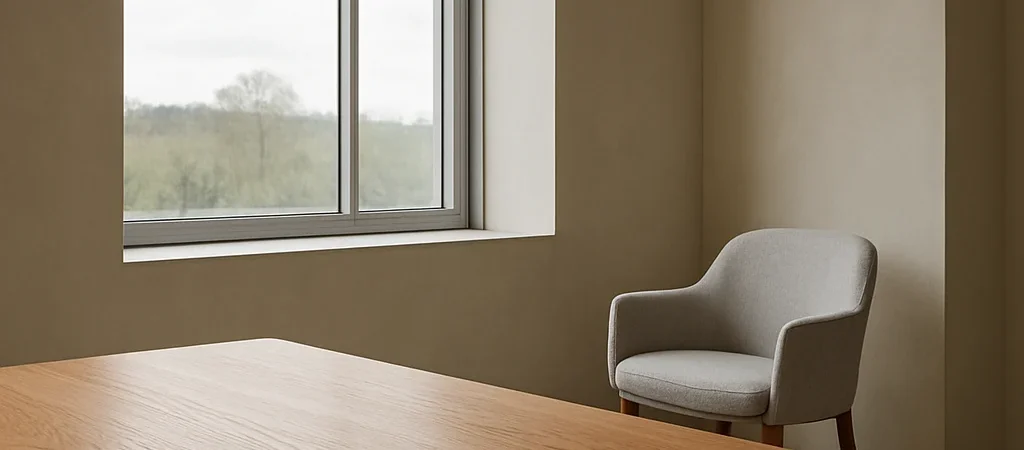
A sunlit room with a long oak table offers two different photographic stories. An architecture image might use the table to show scale beneath a broad window; a design image might move closer to the grain, joinery, and way light falls across the surface. Neither approach is more correct—the assignment determines what deserves attention.
Architecture puts space first
Architectural photography often asks how a building is organized: where the structure opens, how rooms connect, and how daylight travels through them. Wider compositions can provide that context, while carefully controlled verticals help walls and openings read clearly. A person, chair, or table may appear, but usually as a measure of scale rather than the main subject.
Design brings details forward
Design photography shifts attention toward decisions made inside the space: the relationship between materials, color, furnishings, and smaller details. A closer frame can show the edge of a stone counter or the contrast between a linen curtain and painted trim. Available light still matters, but the composition may favor a particular surface or arrangement over a complete room view.
Let the purpose guide the frame
Before choosing a lens or camera position, ask what a viewer should notice first. If the answer is circulation, proportion, or the meeting of building elements, give the room enough space in the frame. If it is a material, furnishing, or considered detail, move closer without losing the context that makes the detail meaningful.